
Anúncios
Introduction to the Concept of Death Becoming Optional
The notion of conquering death has fascinated humanity for centuries, from the ancient quests for the Fountain of Youth to modern medical advancements. Today, the prospect of making death optional transcends the bounds of science fiction and enters a realm where technology and biology converge. This radical idea posits that through technological advancements in fields such as cryonics and consciousness uploading, individuals could potentially suspend or even eliminate death altogether.
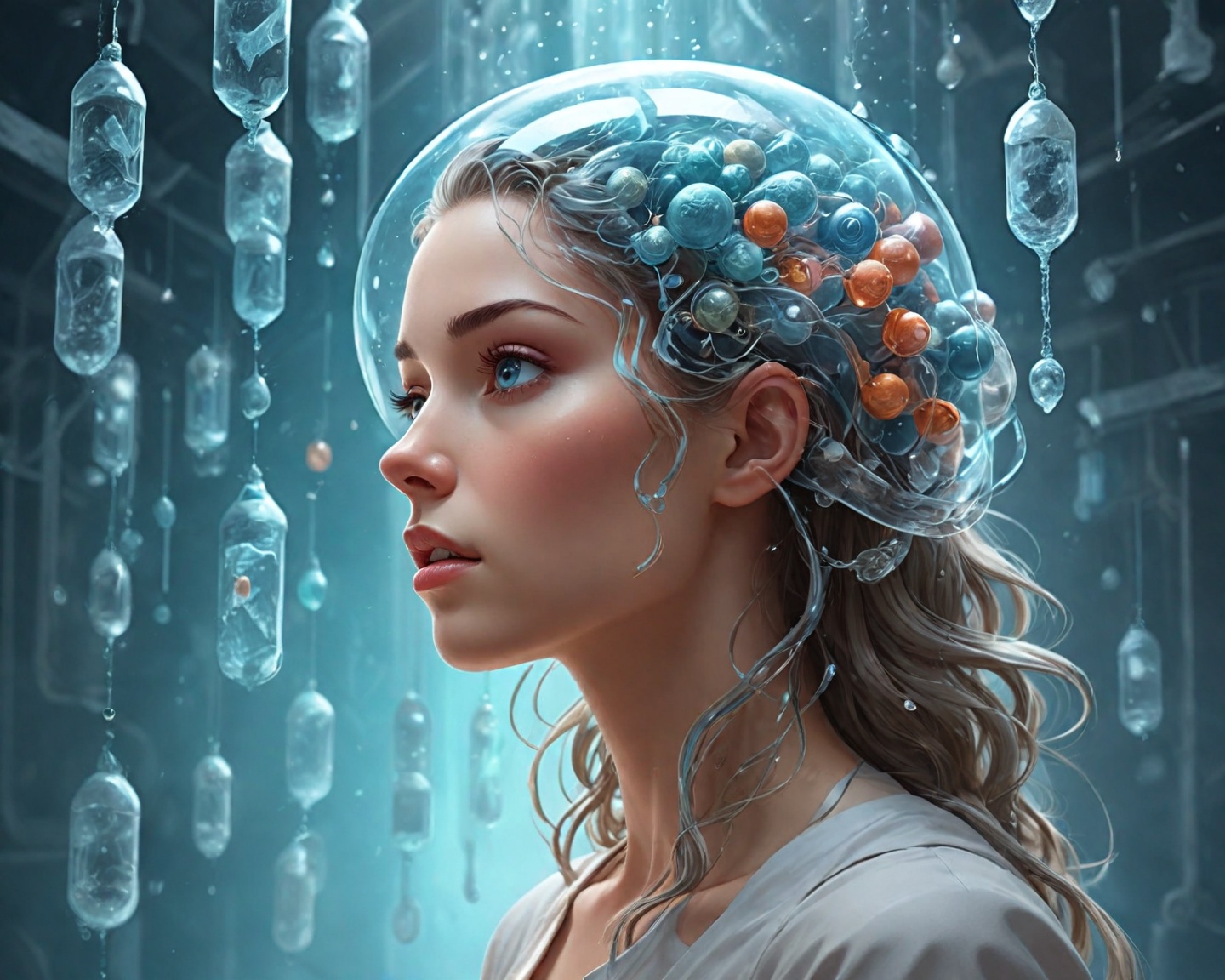
At the heart of this debate is the question: will death become optional? The implications of this question ripple through social, ethical, and philosophical landscapes, challenging long-held beliefs about life and mortality. It raises fundamental questions about identity, essence, and what it means to be truly alive. This exploration delves into the current state of cryogenics, the feasibility of digital immortality, and the broader cultural impacts of potentially living forever.
Anúncios
Overview of Cryogenics and Its Current State
Cryogenics, often conflated with cryonics, is the science of producing extremely low temperatures. In popular culture, cryogenics has been glamorized as a means of freezing individuals after death with the hope of future revival. However, it’s crucial to separate fact from fiction. Cryonics, a subset of cryogenics, involves the deep-freezing of individuals at the point of legal death, preserving them for a time when advanced medical technologies may make revival possible.
Currently, cryonics is not widely practiced or accepted within the scientific community. The process involves cooling the body to preserve vital organs and tissues, with companies like Alcor and the Cryonics Institute leading the charge. Despite these efforts, no human has yet been revived from a cryonic state, and the process remains a topic of intense debate.
Several advancements have been made in cryopreservation at the cellular level, with successful experiments in freezing and thawing small organisms and tissues. However, scaling these successes to whole human bodies presents enormous technical and biological challenges. Critically, the science behind reanimation and the repair of cellular damage due to freezing and thawing remains speculative.
Understanding Consciousness Uploading and Its Feasibility
Consciousness uploading, or mind uploading, refers to the hypothetical process of transferring a human mind to a digital medium, effectively achieving a form of immortality. The concept relies on the belief that consciousness can be mapped and recreated digitally. This ambitious goal requires a deep understanding of the human brain’s intricate workings, including neural connections, memory storage, and cognitive functions.
Currently, neuroscience and computer science intersect in projects attempting to simulate small parts of the brain using supercomputers. For example, the Human Brain Project and initiatives like the Blue Brain Project aim to create detailed digital reconstructions of brain models. However, the complexity of the human brain makes complete consciousness uploading a formidable challenge. Critical technical feats would involve mapping every synapse and the exact molecular configurations that contribute to individual identity.
The feasibility of consciousness uploading remains theoretical, hindered by both philosophical concerns and technological limitations. Many scientists argue that capturing the subjective experience, or qualia, is an insurmountable barrier. Others believe that future breakthroughs in artificial intelligence and machine learning could progressively advance this endeavor.
Ethical Dilemmas Surrounding Cryogenics and Immortality
The availability of technologies that could render death optional raises serious ethical questions. Among the primary concerns is the very definition of life and death. If individuals can be revived from a cryonic state, does this alter our conception of mortality? This technological potential forces societies to reconsider the legal and ethical frameworks surrounding life extension.
Furthermore, cryogenics and mind uploading bring to light issues of access and inequality. If such technologies remain expensive, they could widen existing social and economic divides. Would immortality be the purview of the wealthy, creating new hierarchies based on lifespan?
There are also ethical questions concerning consent and autonomy. For instance, decisions made by current generations could impact future ones dramatically, particularly if revival or uploading processes are not reversible. Additionally, the environmental and resource-based impacts of sustaining potentially immortal populations warrant careful consideration.
Potential Societal Impacts of Optional Death
The ramifications of optional death on society are profound, influencing everything from the economy to personal relationships. An essential consideration is population growth. In a world where death is not inevitable, the strain on resources due to unchecked population increases could be catastrophic, raising questions about sustainability and resource allocation.
Societal structures, including families and career paths, may also shift dramatically. Traditional milestones, such as retirement, could become obsolete as lifespans extend indefinitely. This could lead to economic destabilization but may also spark innovations in how we organize work and retirement.
Additionally, the psychological and cultural impacts of eliminating death’s finality are immense. Religions and philosophies that center around mortality and the afterlife might need to be reevaluated, influencing everything from cultural norms to legal systems. The potential shift in how humanity perceives meaning, purpose, and the value of life itself is profound and largely unexplored.
Religious and Philosophical Perspectives on Immortality
Achieving a state where death is optional challenges foundational tenets of many world religions and philosophies. For instance, religious doctrines that focus on the afterlife and the soul’s immortality must wrestle with the possibility of artificial immortality.
Religious perspectives vary widely. Some traditions may view death’s removal as a hubris-filled attempt to play God, while others might interpret it as fulfilling divine purpose through scientific enlightenment. For example, Buddhist philosophies, which teach impermanence and the cycle of rebirth, might find themselves at odds with technologies promising perpetual physical continuity.
Philosophically, the quest for immortality raises questions about identity and the essence of being. If consciousness can be transferred to a digital substrate, is the resulting entity still the original individual? Existentialists might argue that mortality gives life meaning, and its absence could lead to new existential crises. Such philosophical inquiries help illuminate the potential depths of human experience when faced with the prospect of death as an option instead of an inevitability.
Technological Advancements Driving Cryogenics and Consciousness
The fields of cryogenics and consciousness uploading are propelled by rapid advancements in technology. In cryogenics, breakthroughs in materials science and bioengineering play a crucial role in refining the preservation process. Improved cryoprotectants, compounds used to reduce cellular ice formation, have enhanced the viability of long-term preservation.
In the realm of consciousness uploading, artificial intelligence and machine learning advancements are significant. These technologies aid in understanding neural networks and the complex interplay of brain functions required for digital consciousness. Neuroscience research, leveraging imaging technologies like fMRI and advances in neurobiology, provides the critical insights needed for mapping brain functions.
Supercomputers and quantum computing represent future potential in processing the enormous data required to simulate brain functions accurately. New algorithms promise to manage the vast amounts of information more effectively, slowly bridging the gap between current scientific knowledge and theoretical models of mind uploading.
| Technology Area | Recent Advancements | Impact on Cryogenics | Impact on Mind Uploading |
|---|---|---|---|
| Materials Science | Development of advanced cryoprotectants | Improved preservation quality | Better modeling of neural tissues |
| Artificial Intelligence | Enhanced pattern recognition | N/A | Improved brain data interpretations |
| Supercomputing | Faster data processing capabilities | N/A | Enabling simulations of neural networks |
| Neuroimaging | High-resolution brain mapping | N/A | Detailed understanding of brain structures |
Common Concerns and Misconceptions About Cryogenics
Despite its scientific foundations, many misconceptions persist about cryogenics, often fueled by misinformation and the dramatic portrayals in media. A common misunderstanding is the belief that cryonics can bring back the dead to life as they were, rather than halting the dying process for potential future revival once adequate medical techniques are available.
Other misconceptions include the overestimation of cryonics’ current capabilities. Many believe the technology to be further developed than it actually is, as popular media often blurs the lines between science fiction and science fact. The practical reality is that while cryonics is conceptually sound, its successful application remains unproven at the human level.
Additionally, ethical and moral concerns are sometimes misconstrued as inherently negative rather than complex issues requiring careful deliberation. While many argue about potential risks, addressing these concerns through reasoned dialogue and scientific inquiry can lead to more balanced perspectives.
Practical Applications and Future Possibilities
Beyond the speculative, both cryonics and mind uploading offer fascinating practical applications and future possibilities. In medicine, understanding and refining cryopreservation could revolutionize organ transplantation, allowing for longer storage and wider availability of organs.
Mind uploading, should it become feasible, could assist in developing artificial cognitive enhancements and even virtual reality environments that mimic real-world interactions, offering insights into consciousness and cognition.
Furthermore, the intersectional developments of biotechnology, AI, and cryonics might eventually lead to breakthroughs in general health and longevity. This holistic approach, combining immediate and ambitious goals, contributes to a broader vision of enhancing life quality and challenging the inevitability of death.
FAQ
What is cryogenics?
Cryogenics is the scientific study of extremely low temperatures and their effects, while cryonics involves preserving individuals at low temperatures with the hope of future revival.
How does consciousness uploading work?
Consciousness uploading involves transferring a replica of a human mind onto a digital medium, though this process is still largely theoretical and faces numerous technical challenges.
Are there ethical concerns about making death optional?
Yes, making death optional presents ethical concerns, including definitions of life and death, societal inequality, and the impact on future generations.
Is cryonics effective today?
Currently, cryonics cannot revive humans; it is an experimental practice awaiting future advancements that could address the technical barriers involved.
Can everyone afford cryogenics and mind uploading?
At present, these technologies are costly, raising concerns about accessibility and the potential widening of socioeconomic disparities.
What religions might oppose the elimination of death?
Various religious views might conflict with artificial immortality, particularly those with doctrines focusing on the soul’s afterlife or the concept of reincarnation.
What are the technological challenges of these fields?
Challenges include refining cryopreservation methods, fully understanding brain functions, and adapting AI to simulate consciousness accurately.
Are there misconceptions about cryogenics?
Common misconceptions include believing that cryonics can currently reverse death or that it’s more advanced than it is today. In reality, the technology remains experimental.
Recap
The exploration of whether death can become optional introduces a tapestry of scientific, ethical, and societal discussions. Cryogenics and consciousness uploading represent future possibilities of altering our relationship with death. Both fields are driven by rapid technological advancements but remain impeded by significant scientific and moral challenges. Thus, the feasibility of death becoming truly optional continues to be a subject of intense investigation, requiring careful consideration of ethical, philosophical, and practical implications.
Conclusion: The Future of Humanity and the Ethics of Immortality
As humanity stands on the precipice of potentially choosing life indefinitely, profound ethical, social, and philosophical questions arise. Achieving immortality through cryogenics and mind uploading necessitates a collective introspection into the very essence of life and human identity. Continued dialogue among scientists, ethicists, and society is crucial to navigating these complexities responsibly.
The vision of making death optional inspires both hope and caution, highlighting the delicate balance between aspiration and ethical responsibility. Only through interdisciplinary collaboration and ethical foresight can society harness these technologies to elevate humanity’s future while honoring the fundamental truths that have shaped human existence.