
Anúncios
Uranus Tilted Axis Mystery: Unraveling the Secrets of a Unique Planet
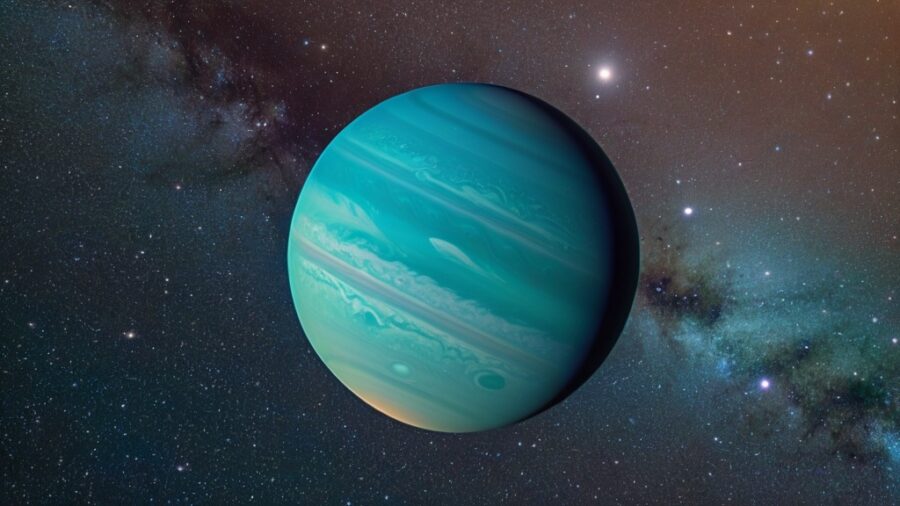
The uranus tilted axis mystery has captivated astronomers and space enthusiasts alike for decades. As the seventh planet from the Sun, Uranus exhibits a distinctive axial tilt that sets it apart from its planetary siblings. This tilted axis leads to extreme seasonal variations and has profound implications for our understanding of planetary formation and evolution. In this article, we will delve into the intricacies of Uranus’s tilt, exploring the theories behind this phenomenon, its effects on the planet’s climate, and comparisons with other planets in our solar system.
As we embark on this journey, you will discover how Uranus’s unique characteristics challenge our perceptions of planetary dynamics. We will also analyze the role of its moons and rings in contributing to its tilted axis and discuss future research endeavors aimed at uncovering further mysteries. By the end of this exploration, you will have a comprehensive understanding of why Uranus stands out in the vast expanse of our solar system.
Anúncios
From the historical context of its discovery to the latest scientific findings, this article promises to provide an in-depth examination of Uranus and its tilted axis. Whether you are a seasoned astronomer or a curious novice, the insights presented here will broaden your perspective on this enigmatic planet.
What is the Tilted Axis of Uranus?
The axial tilt of a planet refers to the angle between its rotational axis and its orbital plane. In the case of Uranus, this tilt is an astonishing 98 degrees, causing the planet to rotate almost on its side. This extreme tilt results in unique day and night cycles, with one pole facing the Sun for an extended period while the other experiences complete darkness. Understanding this tilted axis is crucial to grasping the distinctive features of Uranus.
The Mechanics of Uranus’s Tilt
Uranus’s tilt is not just a minor deviation; it is one of the most extreme in the solar system. For comparison, Earth has a tilt of about 23.5 degrees, while Mars and Venus maintain tilts of approximately 25 and 177 degrees, respectively. The tilted axis of Uranus leads to its unusual seasons, lasting about 21 Earth years each due to its lengthy orbit around the Sun, which takes approximately 84 Earth years.
Historical Observations
Uranus was first discovered by Sir William Herschel in 1781. Initially thought to be a comet, its planetary status was confirmed shortly after. The peculiarities of its tilt became a subject of interest as telescopes improved and more data became available. By the late 20th century, astronomers began to realize that Uranus’s axial tilt was a pivotal factor in understanding its atmosphere and weather patterns.
Theories Behind Uranus’s Unique Tilt
Several theories have been proposed to explain the extreme axial tilt of Uranus. Each theory provides a different perspective on how such a phenomenon could have occurred during the planet’s formation and evolution. Understanding these theories is essential to grasping the broader implications of Uranus’s tilt.
Giant Impact Hypothesis
One of the leading theories is the giant impact hypothesis, which posits that Uranus was struck by a massive object during its early formation. This colossal impact could have altered the planet’s rotational axis dramatically. This theory is supported by simulations that suggest such an event could account for the planet’s current tilt.
Gravitational Interactions
Another theory involves the gravitational interactions between Uranus and its moons or surrounding debris. As Uranus formed, interactions with other celestial bodies in the early solar system could have led to a significant alteration in its tilt. This theory emphasizes the role of gravitational forces in shaping planetary characteristics, showcasing how dynamic interactions can lead to unique outcomes.
Impact of the Tilted Axis on Uranus’s Climate
The tilted axis of Uranus has profound implications for its climate and weather patterns. Unlike other planets, Uranus experiences extreme seasonal changes due to its axial tilt. Each pole can face the Sun for an extended period, leading to significant temperature variations and atmospheric changes.
Seasonal Variations
Uranus’s seasons last around 21 Earth years, resulting in prolonged periods of sunlight and darkness. As one hemisphere is illuminated, it experiences a gradual rise in temperature, while the opposite hemisphere cools drastically. These seasonal changes influence atmospheric circulation patterns, leading to unique weather phenomena that are not observed on other planets.
Atmospheric Dynamics
The atmosphere of Uranus is primarily composed of hydrogen and helium, with traces of methane, which gives the planet its distinctive blue color. The axial tilt affects the distribution of these gases, leading to unusual wind patterns and storm systems. Observations from the Voyager 2 spacecraft in 1986 revealed that Uranus has high-speed winds reaching up to 560 miles per hour (900 kilometers per hour), which are influenced by the planet’s tilt and seasonal changes.
| Planet | Axial Tilt (Degrees) | Orbital Period (Earth Years) | Season Duration (Earth Years) |
|---|---|---|---|
| Uranus | 98 | 84 | 21 |
| Earth | 23.5 | 1 | 1 |
| Mars | 25 | 1.88 | 1.88 |
| Venus | 177 | 0.615 | 117 |
Comparative Analysis with Other Planets
When examining the unique characteristics of Uranus, it is beneficial to compare it with other planets in our solar system. Understanding how Uranus’s tilted axis contrasts with the axial tilts of other planets can provide insights into planetary formation processes and climate dynamics.
Comparison with Gas Giants
Uranus and its neighbor Neptune are both classified as ice giants, yet their axial tilts differ significantly. Neptune has a tilt of about 28 degrees, which is relatively moderate compared to Uranus. This comparison raises questions about the processes that led to such divergent outcomes during their formation. Both planets exhibit unique atmospheric phenomena shaped by their axial tilts and distance from the Sun.
Terrestrial Planets
In contrast to terrestrial planets like Earth and Mars, which have moderate axial tilts, Uranus’s tilt is a stark divergence. The differences in climate and seasonal patterns highlight how axial tilt influences not only atmospheric dynamics but also potential habitability. The extremes observed on Uranus serve as a reminder of the diverse conditions that exist within our solar system.
The Role of Moons and Rings in Uranus’s Tilt
The moons and rings of Uranus play a crucial role in understanding the planet’s tilted axis. Their gravitational interactions can impact the planet’s rotation and axial orientation, adding another layer of complexity to the uranus tilted axis mystery.
Influence of Moons
Uranus has 27 known moons, with the largest being Titania, Oberon, Umbriel, Ariel, and Miranda. The gravitational forces exerted by these moons can influence the planet’s rotation. Some researchers suggest that interactions between Uranus and its moons may have contributed to its unusual tilt. Understanding these interactions is essential for gaining insights into the planet’s history and evolution.
Rings of Uranus
The ring system of Uranus, although less prominent than those of Saturn, comprises 13 distinct rings. These rings may have formed from debris created by collisions between moons or other celestial bodies. The gravitational effects of the rings can also play a role in stabilizing or destabilizing the planet’s axial tilt. Investigating these rings further may yield valuable information regarding their formation and their interaction with the planet’s tilt.
Future Research and Missions to Uranus
As interest in Uranus continues to grow, future missions are being planned to explore this enigmatic planet further. Understanding the uranus tilted axis mystery is crucial for expanding our knowledge of planetary science and the formation of celestial bodies.
Upcoming Missions
NASA has proposed missions aimed at returning to Uranus, with concepts such as the Ice Giants flagship mission. This mission would focus on studying Uranus’s atmosphere, rings, and moons, providing crucial data to unravel the complexities of its tilt and climate. Such missions hold the potential to reveal new insights into the planet’s formation history and the processes that govern its unique characteristics.
The Role of Technology in Exploration
Advancements in space exploration technology are paving the way for more detailed studies of Uranus. Next-generation telescopes and instruments will enable astronomers to gather unprecedented data on the planet’s atmosphere, magnetic field, and seasonal changes. The utilization of these technologies will enhance our understanding of Uranus and its tilted axis, providing a clearer picture of the dynamics at play.
Conclusion
In conclusion, the uranus tilted axis mystery is a captivating subject that highlights the complexity of planetary dynamics within our solar system. Understanding the extreme axial tilt of Uranus sheds light on the processes that shape planetary formation and evolution. From the giant impact hypothesis to the influence of moons and rings, each aspect contributes to a broader understanding of this unique planet.
As we look toward the future, ongoing research and upcoming missions to Uranus promise to deepen our knowledge and resolve lingering questions. The mysteries of Uranus continue to intrigue scientists and space enthusiasts, drawing attention to the significance of studying our cosmic neighbors.
Frequently Asked Questions
Why does Uranus have such a unique axial tilt?
Uranus’s unique axial tilt is primarily attributed to a giant impact during its early formation, which may have altered its rotational axis dramatically. Additionally, gravitational interactions with its moons and surrounding debris may have contributed to this extreme tilt.
How does the tilted axis affect Uranus’s climate?
The tilted axis leads to extreme seasonal variations on Uranus, with one pole facing the Sun for long periods while the other remains in darkness. This results in significant temperature fluctuations and unique atmospheric dynamics not observed on other planets.
What are the implications of Uranus’s tilt for planetary science?
Studying Uranus’s tilt provides insights into planetary formation processes and the gravitational interactions that shape celestial bodies. Understanding these dynamics enhances our knowledge of the diverse conditions within our solar system.
Are there any missions planned to study Uranus?
Yes, NASA has proposed future missions aimed at exploring Uranus further, focusing on its atmosphere, rings, and moons. These missions will utilize advanced technology to gather crucial data and unravel the mysteries surrounding the planet’s unique characteristics.
How does Uranus compare to other planets in terms of axial tilt?
Uranus has the most extreme axial tilt in the solar system at 98 degrees, causing it to rotate nearly on its side. In contrast, Earth has a tilt of 23.5 degrees, while other planets like Neptune and Mars have moderate tilts, leading to different climate dynamics and seasonal variations.
Summary Recap
- Uranus has a unique axial tilt of 98 degrees, resulting in extreme seasonal variations.
- The giant impact hypothesis and gravitational interactions explain the planet’s tilt.
- Uranus experiences significant temperature fluctuations due to its tilt, influencing its climate.
- Comparative analysis with other planets highlights the diversity of axial tilts in our solar system.
- The moons and rings of Uranus may play a role in its tilted axis and formation history.
- Future missions are planned to explore Uranus and deepen our understanding of its mysteries.
- Advancements in technology will enhance data collection and analysis during future explorations.
- Understanding Uranus’s tilt contributes to the broader study of planetary dynamics and formation processes.