
Anúncios
Moon Base Construction Plans: A Comprehensive Guide
The concept of establishing a permanent human presence on the Moon has transitioned from science fiction to a tangible goal within the next few decades. With various space agencies and private companies developing moon base construction plans, the exploration and utilization of lunar resources are more feasible than ever. This article delves into the current state of lunar construction, the technologies available, the challenges faced, and the future prospects for moon colonization.
As humanity looks to the stars, the Moon represents the ideal stepping stone for deeper space exploration. The construction of a moon base serves not only as a platform for scientific research but also as a launch site for missions to Mars and beyond. By understanding the intricacies involved in lunar construction, we can better appreciate the potential benefits and the necessary preparations for such an ambitious endeavor.
Anúncios
Throughout this article, we will explore the innovations in technology that are facilitating lunar construction, the various challenges that builders will encounter, and the design considerations that must be taken into account when constructing habitats on the Moon. We will also discuss the future of moon colonization and address common questions related to lunar base construction.
Current Technologies for Lunar Construction
Robotic Construction Technologies
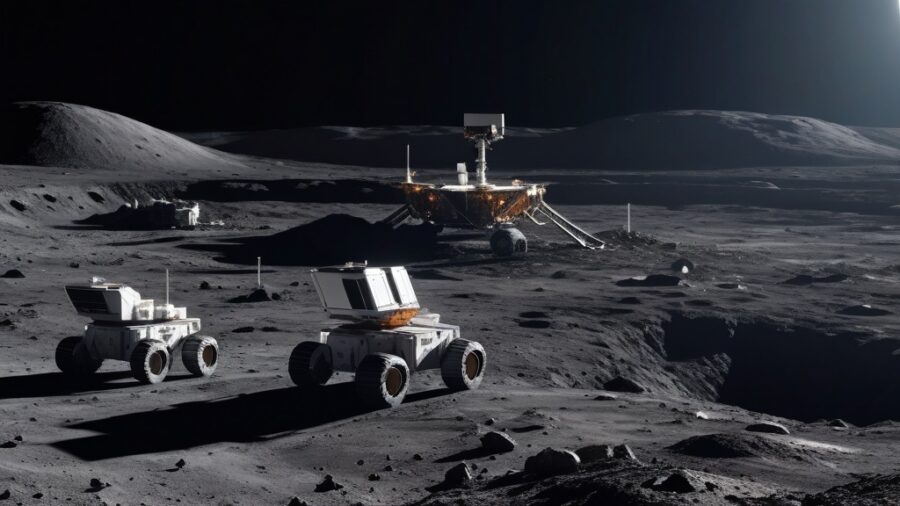
One of the most significant advancements in moon base construction plans is the use of robotics. Robotic systems, such as the NASA’s *Vulcan* and *Rover* prototypes, are being designed to automate the construction process on the lunar surface. These robots can handle tasks such as excavation, material transport, and assembly of lunar habitats, significantly reducing the need for human presence during the initial construction phases.
Moreover, autonomous systems can operate in extreme lunar conditions, where temperatures can swing dramatically. For example, during lunar night, temperatures can drop to -173°C (-280°F), making human activity nearly impossible. Robotic technologies can withstand these conditions and continue work around the clock, ensuring that construction timelines are met efficiently.
Additive Manufacturing Techniques
Additive manufacturing, or 3D printing, is another groundbreaking technology that enhances the feasibility of moon base construction. Materials sourced from the lunar regolith, such as basalt, can be used to create building materials. NASA’s *Regolith Print* project aims to develop methods for constructing lunar habitats using in-situ resources.
By utilizing lunar materials, missions can significantly reduce the costs and complexities associated with transporting building materials from Earth. Studies indicate that using lunar regolith for construction could decrease overall mission costs by approximately 30-40%.
| Technology | Advantages | Current Status |
|---|---|---|
| Robotic Construction | Automation, reduced human presence | Prototypes in development |
| Additive Manufacturing | Utilization of lunar materials, cost-effective | Research and testing phases |
| Teleoperation Systems | Remote control of construction tasks | Operational for testing |
Challenges in Building a Moon Base
Environmental Conditions
The Moon presents a harsh environment that poses significant challenges to moon base construction plans. Factors such as extreme temperatures, radiation exposure, and micrometeorite impacts must be thoroughly addressed. For instance, the lack of atmosphere on the Moon means that structures must be designed to withstand unfiltered solar radiation, which can be detrimental to both equipment and human health.
Additionally, lunar dust, known as regolith, is abrasive and poses risks to machinery and human health. Engineers must develop dust mitigation strategies to prevent equipment malfunctions and ensure the safety of astronauts working on the lunar surface.
Logistical Challenges
The logistics of transporting materials and personnel to the Moon remains a significant hurdle. Current launch costs are estimated to be around $2,700 per kilogram, making it prohibitively expensive to send large quantities of supplies. To mitigate these costs, there is a growing emphasis on utilizing lunar resources, but the technology to process these materials is still in the early stages of development.
Moreover, maintaining a consistent supply chain for future missions is critical. As lunar bases become more permanent, reliable transport systems must be established to ensure the availability of food, water, and other essential supplies. The development of lunar infrastructure, including landing zones and storage facilities, will be essential to address these logistical challenges.
Design Considerations for Lunar Habitats
Structural Integrity and Safety
When designing habitats for the Moon, structural integrity and safety are paramount. The design must account for the unique environmental challenges, including radiation shielding, temperature control, and protection against micrometeorite impacts. Structures may need to be buried beneath the lunar surface or covered with regolith to provide adequate shielding.
Additionally, habitats must be designed for modularity and scalability. As missions evolve, the capability to expand and adapt existing habitats will be crucial for accommodating more crew members and diverse functions, such as research laboratories, living quarters, and recreational areas.
Life Support Systems
Life support systems are critical for sustaining human life on the Moon. These systems must provide breathable air, clean water, and adequate food supplies. Innovations in technologies such as hydroponics and closed-loop life support systems will be essential for long-term lunar habitation.
For instance, NASA’s Advanced Life Support program aims to develop systems that can recycle water and air, reducing the need for resupply missions from Earth. The implementation of sustainable agricultural practices will also play a vital role in ensuring food security for lunar inhabitants.
| Design Factor | Importance | Considerations |
|---|---|---|
| Radiation Shielding | Protection from harmful radiation | Use of regolith or specialized materials |
| Thermal Control | Regulation of extreme temperatures | Insulation and heat management systems |
| Modular Design | Flexibility for future expansion | Interconnected modules for various functions |
Future Prospects for Moon Colonization
International Collaboration and Commercial Interest
The future of moon colonization is likely to be characterized by international collaboration and growing commercial interest. Various space agencies, including NASA, ESA (European Space Agency), and CNSA (China National Space Administration), are currently planning missions aimed at establishing a permanent presence on the Moon. For example, NASA’s Artemis program aims to return humans to the Moon by 2024, with an emphasis on sustainable exploration.
Private companies like SpaceX and Blue Origin are also making significant strides in lunar exploration, with plans to develop landers and transport systems for lunar missions. This commercial interest is expected to accelerate technological advancements and reduce costs associated with moon base construction.
Long-Term Goals and Mars Exploration
Establishing a moon base is seen as a crucial stepping stone for future missions to Mars and beyond. The Moon’s proximity to Earth allows for easier access and testing of technologies needed for longer-duration space travel. Plans for lunar bases include developing facilities for testing life support systems, agricultural practices, and habitation technologies that will be essential for Martian colonization.
By 2030, it is projected that sustained human presence on the Moon could pave the way for missions to Mars by the mid-2030s. This timeline highlights the importance of moon base construction as a vital component of humanity’s journey into deeper space.
FAQ about Moon Base Construction
1. What are the primary goals of moon base construction?
The primary goals include establishing a sustainable human presence on the Moon, facilitating scientific research, and serving as a launch point for deeper space missions, particularly to Mars.
2. How will lunar habitats be powered?
Lunar habitats are expected to utilize solar power as the main energy source. Additionally, advancements in nuclear power may provide a reliable energy supply for continuous operations.
3. What materials will be used for constructing moon bases?
Materials sourced from lunar regolith are favored for construction, as they reduce the need for transporting materials from Earth. Additive manufacturing techniques will be employed to create building components on-site.
4. How will astronauts live and work on the Moon?
Astronauts will live in specially designed habitats equipped with life support systems, including air and water recycling. Work will involve scientific research, resource extraction, and habitat maintenance.
5. What are the expected costs of establishing a moon base?
While costs can vary widely, estimates suggest that establishing a sustainable moon base could range from tens of billions to over a hundred billion dollars, depending on the scope and technology used.
Summary of Key Points
The establishment of a moon base is an ambitious goal that involves numerous technologies and considerations. Key points discussed include:
- Current technologies such as robotics and additive manufacturing are pivotal for lunar construction.
- Environmental and logistical challenges must be addressed to ensure successful moon base construction.
- Design considerations for lunar habitats include safety, structural integrity, and life support systems.
- International collaboration and commercial interest are driving the future of moon colonization.
- The Moon serves as a critical stepping stone for future exploration of Mars and beyond.