
Anúncios
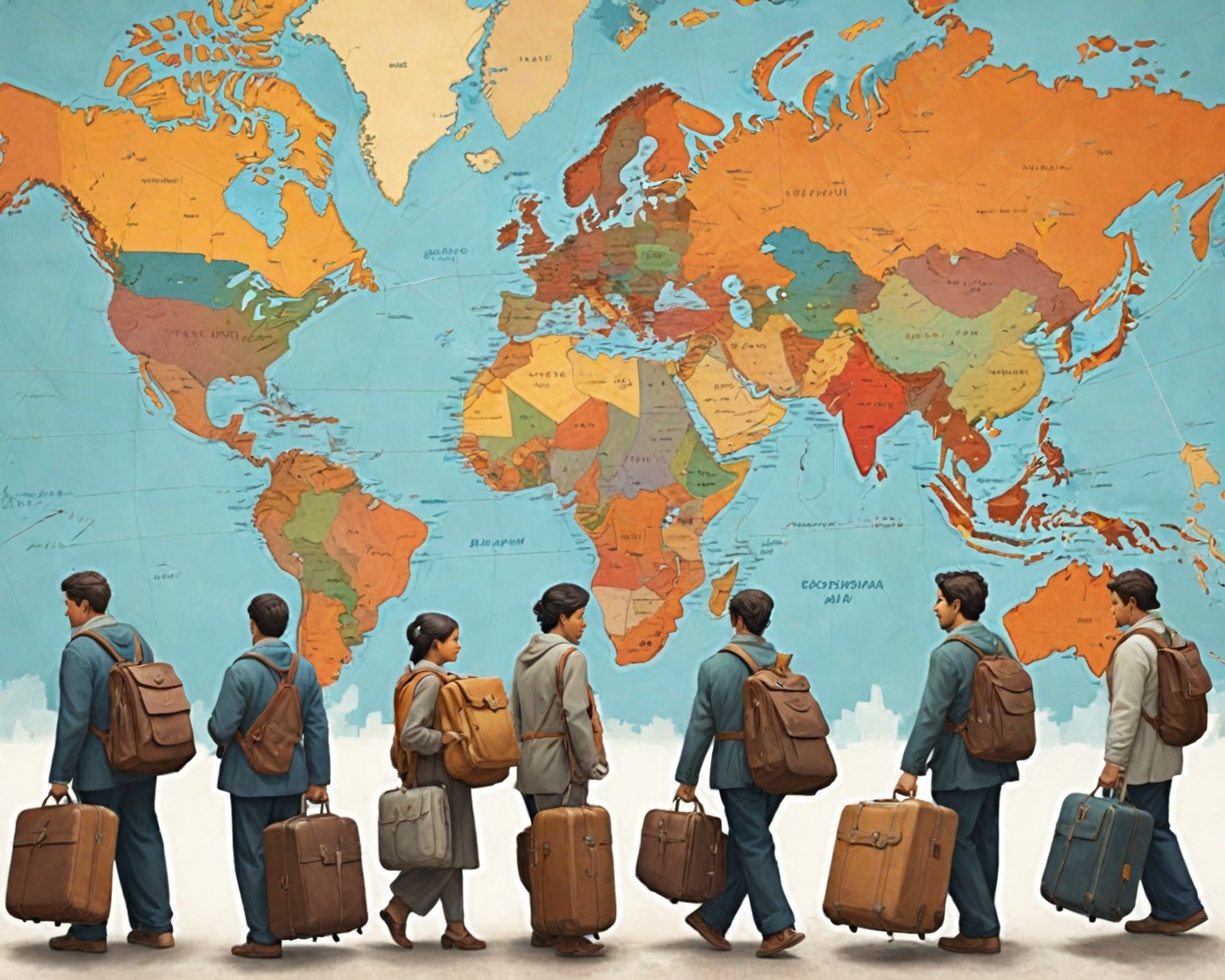
Climate migration is an emerging phenomenon that is sparking widespread discussion and concern across the globe. As the planet experiences the increasing effects of climate change, more individuals and communities find themselves uprooted, seeking safer, more sustainable environments. This mass movement, driven largely by environmental factors, is poised to significantly alter global living patterns. Climate migration is not merely a future threat but a present reality that demands our attention and action.
Addressing climate migration involves understanding its causes, implications, and how societies can adapt to this new norm. This article delves into the dynamics of climate migration, exploring the reasons behind it, the areas most impacted, and the social and economic challenges that follow. We will also highlight governmental responses, case studies, and common misconceptions, providing a comprehensive view of this complex issue. Understanding climate migration is crucial for preparing strategic responses that can mitigate its impact and harness its potential to reshape global living patterns for the better.
Anúncios
What is Climate Migration and Why It Matters
Climate migration refers to the movement of people due to changes in their environment caused by climate change. These changes could involve rising sea levels, increased frequency of extreme weather events, droughts, or shifting temperature zones. As environments become uninhabitable or economic activities like agriculture suffer, people are compelled to relocate to areas with more favorable living conditions and economic opportunities.
The significance of climate migration cannot be overstated. It presents challenges and opportunities that must be understood and managed both locally and globally. First, it affects population distribution, which influences urban planning, infrastructure development, and resource allocation. Second, climate migration can lead to socio-economic and political tensions, especially if large numbers of displaced people move into areas with limited resources or existing vulnerabilities. Finally, it poses both risks and opportunities for countries, cities, and businesses to adapt resiliently, harnessing the potential of diverse, dynamic, and innovative communities.
Climate migration matters because it reflects a fundamental reorganization of global habitability in response to human-driven climate change. Understanding its complexities and preparing adequately can mitigate adverse impacts and leverage new opportunities for economic and social development. The conversation on climate migration highlights the urgent need for comprehensive strategies and collaboration across borders to manage the shifts effectively.
The Role of Global Warming in Driving Migration
Global warming is a principal factor influencing climate migration. It refers to the long-term increase in Earth’s average temperature, primarily fueled by greenhouse gas emissions from human activities like burning fossil fuels, deforestation, and industrial processes. This warming has wide-ranging effects on weather patterns, leading to several environmental phenomena that contribute to climate migration.
Firstly, global warming contributes to sea-level rise, submerging coastal areas and small island nations. Regions like the Pacific Islands, parts of Bangladesh, and coastal U.S. cities are particularly susceptible to flooding, causing residents to flee to higher ground. According to the Intergovernmental Panel on Climate Change (IPCC), sea-level rise could displace millions of people in low-lying coastal regions by 2050.
Moreover, global warming exacerbates extreme weather events, including hurricanes, heatwaves, and severe storms, increasing their intensity and frequency. These disasters destroy property, threaten lives, and disrupt economies, forcing people to seek refuge elsewhere. Heatwaves alone pose serious health risks, particularly to vulnerable populations, and can render regions uninhabitable.
Finally, shifts in precipitation patterns due to global warming lead to droughts and water scarcity, significantly impacting agriculture and food security. Regions dependent on seasonal rainfalls and predictable weather patterns are particularly vulnerable. As crops fail and water sources diminish, affected populations have little option but to migrate in search of resources and better living conditions. Thus, global warming serves as a catalyst for migration, reshaping the way populations interact with their environment.
Regions Most Affected by Climate-Induced Migration
The impacts of climate change do not affect all regions equally; some areas are more susceptible to the adverse effects, driving higher rates of climate-induced migration. Identifying these regions helps to prioritize humanitarian aid, develop strategic adaptation plans, and allocate resources more effectively.
In South Asia, countries like Bangladesh, India, and Pakistan are experiencing frequent flooding and extreme weather events. Bangladesh, for instance, is vulnerable to sea-level rise and cyclones, prompting many to move from the coastal areas to more inland regions. This internal migration places additional pressure on urban centers, which struggle to accommodate the influx of people.
In Africa, the Sahel region grapples with serious desertification and water scarcity issues. Countries such as Chad, Nigeria, and Sudan face severe droughts that threaten subsistence farming and livestock, driving rural populations toward cities or across borders. The ongoing crisis represents a pressing challenge for resource management, government policy, and international aid.
Elsewhere, small island nations in the Pacific are among the first to confront existential threats from rising sea levels. Countries like Kiribati and the Maldives face the possibility of entire populations needing relocation as their lands become unsustainable. These scenarios necessitate international cooperation, relocation agreements, and migration policies that recognize the dire needs of these communities.
| Region | Major Climate Issue | Primary Migration Type | Impact on Population |
|---|---|---|---|
| South Asia | Flooding, cyclones | Internal displacement | Urban population pressure |
| Africa – Sahel | Drought, desertification | Rural to urban, cross-border | Food insecurity, economic strain |
| Pacific Islands | Sea-level rise | Total relocation | Loss of cultural heritage |
| Coastal Zones | Sea-level rise, hurricanes | Urban to rural, intra-regional | Economic losses |
Economic and Social Impacts of Climate Migration
Climate migration poses significant economic and social impacts both on the regions experiencing outflows of people and those receiving them. Understanding these impacts is essential for developing effective responses and leveraging potential opportunities arising from the movement of people.
Economically, regions that lose populations due to climate migration often experience a workforce reduction, leading to decreased economic productivity. However, this loss can be offset if proper infrastructure and investment are attracted to develop climate-resilient industries. On the flip side, receiving regions may face short-term economic strains as they strive to accommodate the influx, investing in housing, job creation, and social services. Yet, new populations can bring diversity, innovation, and labor force enhancement, stimulating economic vitality if managed properly.
Socially, climate migration can alter the cultural dynamics of both regions of departure and arrival. In places where communities shift or blend, cultural tensions may surface, potentially leading to discrimination or conflict. It is crucial to promote inclusivity and cultural exchange to smooth transitions and enrich societies. Education, community engagement, and inclusive policies play critical roles in fostering social cohesion.
Moreover, climate migration presents public service and infrastructure challenges. Healthcare systems may become overburdened, educational facilities overcrowded, and housing infrastructure strained. Addressing these issues requires comprehensive urban planning and investment in resilience-building strategies. The positive outcome hinges on proactive policies that integrate migrants, anticipate needs, and build sustainable, resilient communities.
How Governments are Addressing Climate Migration Challenges
Governments worldwide are increasingly recognizing the importance of addressing climate migration, employing various strategies to manage its impacts on populations and economies. These strategies encompass policy development, international cooperation, and grassroots initiatives to mitigate adverse effects and foster adaptation.
Policy frameworks have been implemented to incorporate climate migration into national adaptation plans and development strategies. Countries like Finland and New Zealand are considering climate migration in their foreign policy and development aid programs to support vulnerable regions and promote sustainable practices. Adaptive approaches also focus on enhancing the resilience of infrastructure and systems against climate change effects to reduce displacement pressures.
International cooperation plays a pivotal role in managing transboundary migration impacts. The Global Compact for Safe, Orderly, and Regular Migration, adopted by United Nations member states, emphasizes the necessity for collaborative approaches to manage migration sustainably and humanely. Countries are encouraged to share knowledge, resources, and best practices to address climate-induced migration effectively.
Locally, grassroots initiatives and community-based adaptation projects are critical in building resilience and supporting sustainable livelihoods. Governments and organizations work with local communities to develop adaptation plans that improve agricultural practices, enhance water management, and protect natural resources. Such measures empower communities to adapt in place, reducing the need for migration and fostering sustainable local development.
The Rise of Climate Refugees: A Global Perspective
The term “climate refugees” is increasingly used to describe individuals forced to flee their homes due to adverse climate change effects. Unlike traditional refugees defined by persecution or conflict, climate refugees migrate due to environmental changes threatening their livelihoods, habitat, and security. This emerging category of displaced persons is gaining recognition but lacks a formal definition within international law.
Globally, the rise of climate refugees underscores the need for comprehensive frameworks to support their rights and needs. Current international legal instruments, such as the 1951 Refugee Convention, do not explicitly address climate-induced displacement. This gap creates challenges in legal recognition, protection, and assistance for affected populations. Advocacy groups and policymakers are calling for legal reforms and international agreements to acknowledge climate refugees’ unique circumstances.
The phenomenon is particularly pressing in regions like the Pacific Islands, where entire populations may need relocation due to rising sea levels. These communities face the loss of their homelands, cultural heritage, and identity, highlighting the urgency for global solidarity and action. Advocacy for climate justice emphasizes equitable distribution of resources, burden-sharing, and reconstruction assistance to provide adequate support to climate refugees.
Additionally, the topic of climate refugees raises ethical considerations about accountability and responsibility. Countries historically contributing to high greenhouse gas emissions bear greater responsibility for the impacts of climate change and should play a pivotal role in supporting affected regions. Concerted global efforts are essential to address the complexity of climate-induced displacement, providing protection, resources, and durable solutions for those affected.
Case Studies of Climate Migration in Action
Examining case studies of climate migration provides concrete insights into the dynamics, challenges, and responses observed in different contexts. These examples underscore the variability in migration experiences and highlight lessons learned from adaptation and policy initiatives.
In Bangladesh, rural communities frequently relocate due to severe flooding and riverbank erosion along the Brahmaputra and Ganges rivers. Programs promoting community-based disaster management and adaptive agricultural practices are integral in reducing vulnerability. Social resilience initiatives that provide skills training, education, and livelihood diversification support are crucial components impacting local adaptation strategies.
In the Pacific Islands, Kiribati has taken proactive steps by purchasing land in Fiji as a potential relocation site for its population. This strategic move represents a bold initiative to provide a future for its people as climate impacts intensify. Kiribati’s response has sparked discussions on the feasibility and ethics of cross-border relocation options and the role of international cooperation in global migration management.
In the United States, cities such as Miami are grappling with sea-level rise threats. Adaptation efforts include implementing comprehensive flood management plans, investing in resilient infrastructure, and public awareness campaigns. Urban planning that integrates green spaces, enhances drainage systems, and elevates critical infrastructure demonstrates an agile approach to addressing migration pressures while maintaining economic vibrancy.
These case studies reveal the importance of tailored responses considering cultural, economic, and geographical contexts. Localizing solutions and fostering community involvement are pivotal in enhancing adaptive capacity and minimizing displacement impacts. Multilevel policy coordination and global support are instrumental in realizing these efforts at national and international scales.
Common Misconceptions About Climate Migration
The topic of climate migration is often surrounded by misconceptions that can hinder effective understanding and response efforts. Distinguishing myth from reality is vital for informed policy-making and community engagement.
One common misconception is that climate migration always results in mass cross-border movements. In reality, most climate-induced migration occurs internally as communities move from rural to urban areas within the same country. This internal displacement underscores the need for national strategies focusing on rural development and urban infrastructure adaptation to accommodate population shifts.
Another myth is that climate migrants are merely environmental event “victims,” lacking agency. In contrast, many migrants actively make strategic, well-considered decisions to improve their livelihoods and secure long-term safety. Empowering communities with information, resources, and decision-making support encourages proactive adaptation rather than passive displacement.
Additionally, there’s a misconception that climate migration is a distant future problem. However, displacement due to climate change is already occurring globally, affecting millions. Recognizing the immediacy of the issue helps direct timely investments and policy actions to enhance current and future resilience against climate change impacts.
Addressing these misconceptions involves raising awareness, promoting accurate representations of the issues, and encouraging open dialogues that foster comprehensive understanding and collaborative problem-solving. Effective communication strategies can dispel myths and bridge gaps in knowledge, leading to more robust policies and community actions.
Future Predictions for Climate Migration Trends
Understanding future climate migration trends involves analyzing current data, modeling projections, and considering global climate policy pathways. These insights help policymakers, communities, and businesses prepare for emerging challenges and opportunities.
Experts predict that climate migration will increase in frequency and magnitude as climate change impacts intensify. By 2050, estimates from the World Bank suggest that up to 143 million people could be displaced within their own countries across Sub-Saharan Africa, South Asia, and Latin America. Increased mobility will require robust social policies, resilience planning, and international cooperation to foster sustainable development.
The future of climate migration also considers the differential impacts across economic, social, and political landscapes. Regions with already stressed resources or socio-political tensions may face higher risks of conflict exacerbated by migration pressures. Preparing adaptive policy frameworks that strengthen social cohesion and resource management is essential for peace and stability.
Urban areas will likely become focal points for climate migrants, necessitating significant public infrastructure investments in housing, transportation, and services. Cities that adopt inclusive and adaptive urban planning will be better positioned to accommodate newcomers, enhance innovation, and boost economic resilience. Modeling future scenarios emphasizes the need for flexibility, agility, and creativity in design and policy approaches.
Further, technological advancements and innovation in climate forecasting and adaptive solutions can significantly enhance resilience and reduce migration pressures. Implementing smart water management systems, sustainable agriculture practices, and renewable energy sources can support local livelihoods and mitigate displacement drivers. Collaboration among governments, businesses, and civil society will pave the path toward sustainable living patterns.
Practical Steps to Prepare for Climate Migration
Proactive preparation for climate migration is essential to mitigate negative impacts and leverage opportunities presented by this global challenge. Practical steps can guide governments, organizations, and communities toward building resilience and accommodating shifting population dynamics.
-
Strengthen Research and Data Collection: Expansion of data collection and research efforts is essential to identify vulnerable regions and populations. Improved climate models and risk assessments can guide targeted interventions, policymaking, and resource allocation.
-
Enhance Urban Planning and Infrastructure: Investing in resilient urban infrastructure that incorporates climate projections ensures that cities can withstand increased migration pressure. Green infrastructure, sustainable housing, and inclusive transportation networks enhance livability and accommodate future growth.
-
Develop Inclusive Policy Frameworks: Policies that promote social inclusion, recognize climate migrants’ rights, and offer economic opportunities facilitate smooth transitions and adaptation. Ensuring migrants have access to essential services such as education, healthcare, and employment is crucial for successful integration.
-
Foster Community-Based Adaptation: Engaging local communities in adaptation planning fosters buy-in and tailor-fit strategies addressing context-specific challenges. Collaboratively developed initiatives enhance resource management, increase awareness, and build grassroots resilience.
-
Strengthen International Cooperation: Cross-border coordination, burden-sharing agreements, and regional collaboration enhance collective responses to climate migration. Strengthening legal frameworks to protect climate migrants ensures humanitarian support and assistance where needed.
-
Invest in Technological Innovation: Leveraging technology to advance climate modeling, disaster prediction, and adaptive solutions enhances readiness. Innovations in renewable energy, water management, and sustainable agriculture reduce vulnerabilities and support stable livelihoods.
By implementing these practical steps, stakeholders can navigate the challenges of climate migration and create pathways for sustainable development and socio-economic resilience. Building capacity at all levels will ensure that migration outcomes are positive, promoting a more equitable and stable global society.
Frequently Asked Questions
What is the difference between climate migration and climate refugees?
Climate migration refers broadly to the movement of people due to environmental changes caused by climate change. Climate refugees, however, are individuals forced to leave their homes because these changes make their environment uninhabitable. Climate refugees lack official recognition under international law, unlike traditional refugees who flee persecution or conflict.
How does climate migration affect economic development?
Climate migration impacts economic development by relocating populations, altering workforce dynamics, and changing consumption patterns. Losing populations can hurt economies due to reduced productivity, while influxes can strain resources initially before potentially boosting innovation and economic vitality if well managed.
Are most climate-induced migrations permanent or temporary?
The nature of climate-induced migrations varies. Some are temporary, where individuals move until conditions improve, such as after floods. Others are permanent, particularly when regions face persistent threats like sea-level rise. The context and severity of climate impacts largely influence this dynamic.
How are wealthy nations supporting countries with high climate migration?
Wealthy nations support vulnerable countries through financial aid, technology transfer, capacity-building projects, and facilitating policy dialogue to address climate impacts. However, more robust, equitable, and collaborative international responses are needed to adequately handle the growing scale of climate migration.
Can climate migration lead to political conflicts?
Yes, climate migration can lead to political conflicts, especially in regions with existing resource scarcity or socio-political tensions. Competition for resources like land and water might exacerbate tensions, necessitating proactive conflict-prevention strategies and inclusive governance models.
What role does technology play in managing climate migration?
Technology plays a crucial role in managing climate migration by enhancing climate risk assessments, disaster prediction, and developing adaptive infrastructure solutions. Technological advancements in renewable energy, sustainable agriculture, and water management decrease vulnerabilities and support community resilience.
Recap
Climate migration is a pressing issue reshaping global living patterns as environmental changes drive people to relocate for safety and sustainability. This phenomenon is fueled by global warming effects like sea-level rise and extreme weather, affecting regions disproportionately. Migration impacts span economic and social realms, demanding strategic policy responses. Despite misconceptions, climate migration is a current reality, needing global attention to avoid political conflicts and ensure fair support for climate refugees. Future trends suggest increased migration frequency, urging preparedness through community engagement, international collaboration, and technological innovation. Practical steps outline strategies to embrace migration challenges, turning them into opportunities for sustainable development.
Conclusion
The repercussions of climate migration extend beyond simple movement, encompassing a reshaping of societies, economies, and cultures. As global citizens, recognizing climate migration as an essential consequence of climate change underscores its immediacy and importance. Proactive planning, international cooperation, and embracing adaptive innovations are vital steps toward managing its impacts effectively.
Our shared future hinges on embracing climate migration constructively, with solutions that respect human dignity, promote equitable development, and foster resilience. By understanding the complexities of this phenomenon, we can work collectively to redefine living patterns sustainably, ensuring that humans can thrive on a climate-resilient planet.