
Anúncios
Introduction to the James Webb Space Telescope
The James Webb Space Telescope (JWST) represents a monumental leap in our quest to understand the universe. Launched on December 25, 2021, it is considered the successor to the Hubble Space Telescope and is designed to explore deeper into the cosmos than ever before. As we delve into the capabilities and significance of the JWST, we will uncover how this space observatory is set to transform our comprehension of the universe.
With its advanced technology and innovative design, the James Webb Space Telescope aims to answer fundamental questions about the origins of stars, galaxies, and planetary systems. Its primary mission is to observe the universe in infrared wavelengths, allowing it to penetrate cosmic dust clouds that obscure the view of many celestial objects. This capability will reveal the hidden aspects of the universe, providing insights that were previously unattainable.
Anúncios
This article will explore the groundbreaking technology behind the JWST, its scientific objectives, and how it compares to its predecessor, the Hubble Space Telescope. Additionally, we will discuss the future of astronomy as influenced by the JWST, along with the challenges faced during its development and deployment.
The Technology Behind the James Webb Space Telescope
Advanced Optical Systems
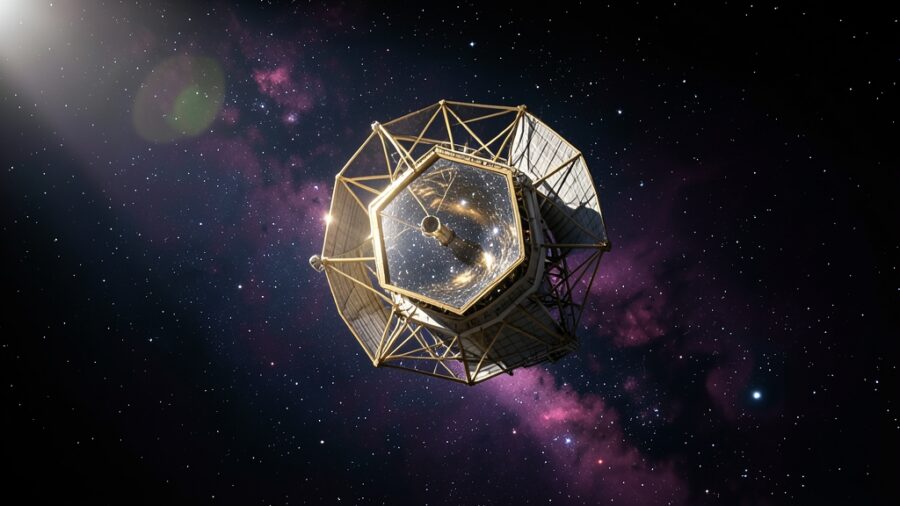
At the heart of the James Webb Space Telescope lies its advanced optical system, which includes a large, segmented primary mirror measuring 6.5 meters in diameter. This mirror is made up of 18 hexagonal segments, each crafted from beryllium and coated with a thin layer of gold to enhance reflectivity in infrared light. This design allows the JWST to gather more light than Hubble, significantly increasing its sensitivity and resolution.
One of the most notable features of the JWST is its ability to operate in the infrared spectrum. This capability is crucial for observing distant objects that emit heat rather than visible light, such as newly formed stars and exoplanets. The telescope’s instruments, including the Near Infrared Camera (NIRCam) and the Mid-Infrared Instrument (MIRI), are designed to capture these infrared wavelengths, enabling scientists to study celestial phenomena in unprecedented detail.
The Sunshield and Cooling Mechanisms
The James Webb Space Telescope is equipped with a five-layer sunshield that protects its instruments from the heat of the Sun and Earth. This sunshield is about the size of a tennis court and plays a vital role in maintaining the telescope’s operational temperature, which must be kept below -223 degrees Celsius to ensure accurate infrared observations.
The design of the sunshield allows it to block sunlight while reflecting heat away from the telescope. Each layer of the sunshield is made of a specialized material designed to withstand extreme temperatures. This innovative cooling mechanism is crucial for the JWST to function effectively, as any excess heat could interfere with its sensitive instruments.
The Science Goals of the James Webb Space Telescope
Understanding Cosmic Origins
The primary scientific goal of the James Webb Space Telescope is to explore the origins of the universe, including the formation of the first stars and galaxies. By observing the cosmic dawn, the JWST aims to provide insights into how these celestial bodies emerged from the primordial gas and dust present in the early universe. This research will help scientists understand the processes that led to the formation of the universe as we know it today.
Additionally, the JWST will investigate the lifecycle of stars, from their formation in dense molecular clouds to their eventual death as supernovae. By studying these processes, astronomers can gain a deeper understanding of the elements that are produced during stellar evolution and how they contribute to the chemical makeup of the universe.
Searching for Exoplanets and Life Beyond Earth
Another significant goal of the JWST is the search for exoplanets and the potential for life beyond Earth. Utilizing its advanced spectroscopic capabilities, the telescope will analyze the atmospheres of distant planets to identify the presence of key molecules, such as water vapor, carbon dioxide, and methane. These observations could provide vital clues about the habitability of these worlds.
The ability to study exoplanet atmospheres in detail represents a significant advancement in astrobiology. The JWST will help identify planets that may harbor conditions suitable for life, expanding our understanding of the universe and our place within it.
Comparative Analysis: Hubble vs. James Webb
Technological Advancements
While both the Hubble Space Telescope and the James Webb Space Telescope serve as powerful tools for astronomical research, their technological differences are substantial. Hubble primarily observes in the visible and ultraviolet spectrum, whereas the JWST is designed exclusively for infrared observations. This distinction allows the JWST to peer through cosmic dust and observe cooler objects, such as distant galaxies and brown dwarfs, which Hubble cannot effectively capture.
The JWST’s larger mirror and advanced instruments significantly enhance its sensitivity and resolution compared to Hubble. This increased capability enables astronomers to study fainter objects and phenomena that were previously beyond reach. For instance, the JWST can observe galaxies that formed just a few hundred million years after the Big Bang, providing insights into the early universe.
Mission Duration and Operational Goals
The Hubble Space Telescope has been operational since its launch in 1990 and has provided invaluable data for over three decades. In contrast, the James Webb Space Telescope is designed for a minimum mission duration of 10 years, with the possibility of extending its operational life further, depending on its performance and maintenance requirements.
The operational goals of both telescopes also differ. Hubble has focused on a wide range of astronomical phenomena, including the study of nebulae, star formation, and the expansion of the universe. The JWST, on the other hand, has a more targeted approach, concentrating on understanding the origins of the universe, the formation of stars and galaxies, and the search for potentially habitable exoplanets.
The Future of Astronomy with the James Webb Space Telescope
New Discoveries Await
The launch of the James Webb Space Telescope heralds a new era in astronomy, promising to unlock secrets of the universe that have long eluded scientists. With its advanced capabilities, the JWST is poised to make groundbreaking discoveries that will reshape our understanding of cosmic phenomena. For instance, its observations of distant galaxies may provide insights into how galaxies evolve over billions of years and how they interact with one another.
Furthermore, the JWST’s ability to study the atmospheres of exoplanets could revolutionize our knowledge of planetary systems and the potential for life beyond Earth. As the telescope begins its scientific operations, astronomers anticipate a wealth of data that will lead to new theories and models of the universe.
Collaboration and Global Impact
The James Webb Space Telescope is a collaborative effort involving NASA, the European Space Agency (ESA), and the Canadian Space Agency (CSA). This international partnership not only enhances the scope of scientific research but also fosters a sense of shared responsibility in exploring the cosmos. The collaborative nature of the JWST project underscores the importance of global cooperation in advancing our understanding of the universe.
As the JWST begins to unveil the mysteries of the cosmos, its findings will have far-reaching implications for numerous fields, including astrophysics, planetary science, and even philosophy. The telescope’s discoveries will challenge existing paradigms and inspire future generations of scientists and enthusiasts alike.
Challenges and Triumphs in the James Webb Mission
Overcoming Technical Hurdles
The journey to the launch of the James Webb Space Telescope was not without its challenges. The project, initially proposed in 1996, faced numerous technical hurdles and budgetary constraints that delayed its launch by more than a decade. The complexity of the telescope’s design and the need for precise engineering meant that each component had to undergo rigorous testing and evaluation.
One of the significant challenges was the deployment of the telescope’s sunshield, which had to unfold flawlessly in orbit. Engineers conducted extensive simulations and tests to ensure that the sunshield would deploy correctly, a critical step for the telescope’s success. Fortunately, the deployment process was executed perfectly, allowing the JWST to begin its mission.
Achievements and Milestones
Despite the challenges faced during its development, the James Webb Space Telescope has already achieved several milestones since its launch. After reaching its designated orbit at the second Lagrange point (L2), the telescope underwent a series of commissioning activities to calibrate its instruments and ensure proper functionality. These initial tests have demonstrated the telescope’s capabilities and confirmed that it is ready for scientific observations.
As the JWST embarks on its scientific mission, it has already begun to provide stunning images and data that showcase its extraordinary potential. The first images, expected to be released in mid-2022, will mark a significant achievement in the project and provide a glimpse into the wonders that lie ahead.
Conclusion
The James Webb Space Telescope stands as a testament to human ingenuity and our relentless pursuit of knowledge about the universe. With its advanced technology and ambitious scientific goals, the JWST is set to revolutionize our understanding of cosmic origins, star formation, and the potential for life beyond Earth. As we eagerly await the discoveries that the JWST will unveil, it is clear that this remarkable space observatory will shape the future of astronomy for decades to come.
In summary, the James Webb Space Telescope is not just a scientific instrument; it is a gateway to the cosmos, opening up new possibilities for exploration and understanding. The challenges overcome during its development serve as a reminder of the dedication and collaboration required to achieve such a monumental feat. As we look to the stars, the JWST will undoubtedly illuminate the path toward new discoveries and insights into the universe we inhabit.
Frequently Asked Questions about the James Webb Space Telescope
What is the primary purpose of the James Webb Space Telescope?
The primary purpose of the James Webb Space Telescope is to explore the origins of the universe, including the formation of stars and galaxies, and to search for potentially habitable exoplanets. Its advanced infrared capabilities allow it to observe celestial phenomena that were previously obscured.
How does the JWST differ from the Hubble Space Telescope?
The JWST differs from Hubble in several key ways. It operates primarily in the infrared spectrum, allowing it to observe cooler objects and penetrate cosmic dust. Additionally, the JWST has a larger mirror, which increases its sensitivity and resolution compared to Hubble.
What challenges did the JWST face during its development?
The JWST faced numerous challenges, including technical hurdles, budget constraints, and delays in its launch schedule. Ensuring the successful deployment of its sunshield and instruments required extensive testing and engineering efforts.
When was the JWST launched?
The James Webb Space Telescope was launched on December 25, 2021. Following its launch, it traveled to its designated orbit at the second Lagrange point (L2) and began a series of commissioning activities to calibrate its instruments.
What kind of data can we expect from the JWST?
We can expect to receive groundbreaking data from the JWST, including high-resolution images of distant galaxies, detailed studies of star formation, and analyses of exoplanet atmospheres. These observations will enhance our understanding of the universe and potentially lead to new discoveries.
Recap of Key Points
- The James Webb Space Telescope is a groundbreaking observatory launched on December 25, 2021.
- It features advanced technology, including a large segmented mirror and a five-layer sunshield.
- The primary scientific goals include understanding cosmic origins and searching for exoplanets.
- The JWST operates primarily in the infrared spectrum, contrasting with Hubble’s visible and ultraviolet focus.
- Collaboration among NASA, ESA, and CSA highlights the global impact of the JWST mission.
- Despite challenges during development, the JWST has achieved significant milestones since its launch.
- Its discoveries are expected to reshape our understanding of the universe and inspire future research.
- The JWST serves as a testament to human ingenuity and the quest for knowledge beyond our planet.